
AI and Algorithm Learning Path
This page connects the published algorithm, machine learning, deep learning, and networking material into an executable route. It is not a generic course outline; it is organized around understanding the problem, running the code, and checking the result.
For each stop, keep a small local lab note: input data, key parameters, output screenshots or logs, and at least one failed case. The goal is to leave each article with something reproducible, not only a definition.
| Stage | Question to answer | Site material | Completion evidence |
|---|---|---|---|
| Algorithm state | How recursive search expands, prunes, and backtracks. | Eight queens basics, bitmask optimization, and algorithm visualization. | You can explain the state stack, conflict checks, and how the 92 solutions are verified. |
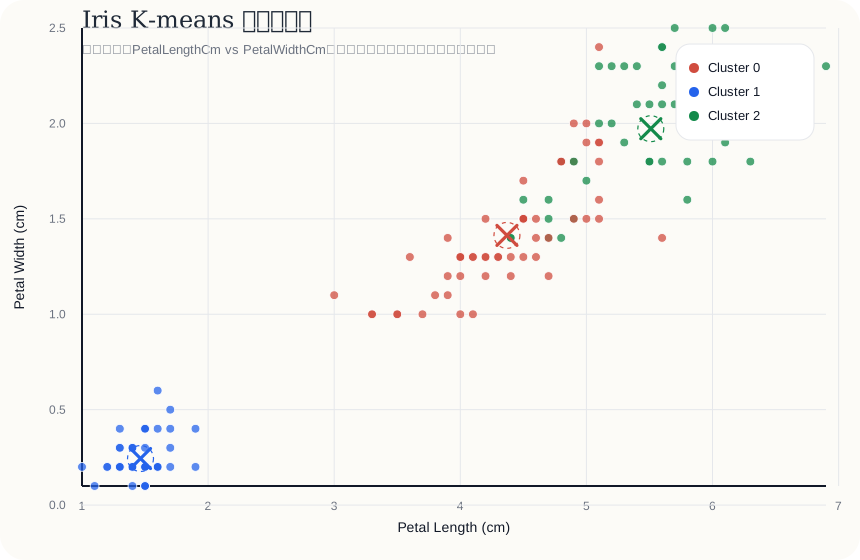
| Machine learning lab | How preprocessing, initialization, convergence, and error metrics connect. | Iris K-means, machine learning workflow, and feature engineering notes. | You can record SSE, restart count, standardization settings, and failure modes. |
| Deep learning basics | How matrix calculus, backpropagation, convolution, and attention form a training loop. | Neural network basics, computation graphs, and Transformer math. | You can hand-check one forward/backward pass and compare it with code output. |
| Systems and networking | How DNS, TCP, TLS, HTTP/3, proxies, and caches affect real requests. | Networking fundamentals, cache observability, and proxy boundary articles. | You can draw the request path and mark status codes, cache hits, and trust boundaries. |
Learning path
A four-step route through the current algorithm work
Track progress locally as you move from backtracking basics to bitwise optimization, then into the Iris K-means bundle.
-
1
Backtracking
Eight queens with classic backtracking
Start with state representation, conflict checks, recursive search, and the full C/Python solving flow.
-
2
Optimization
Bitwise optimization for the eight queens problem
Move from array-based checks to compact bit masks so the same search becomes faster and easier to reason about.
-
3
Clustering
K-means clustering on the Iris dataset in C
Study standardization, K-means++ initialization, restart selection, SSE, and the final clustering result.
-
4
Materials
K-means companion downloads
Download the dataset, C source file, flowchart, visualization, and zip archive used by the article.

How to use this route
If this is your first visit, start with algorithm state and machine learning experiments. If you already write small Python or C programs, jump into deep learning math or protocol labs. Each topic tries to pair explanation with code, diagrams, or downloads so the page has evidence beyond a summary.